contato@perfumeprosa.com
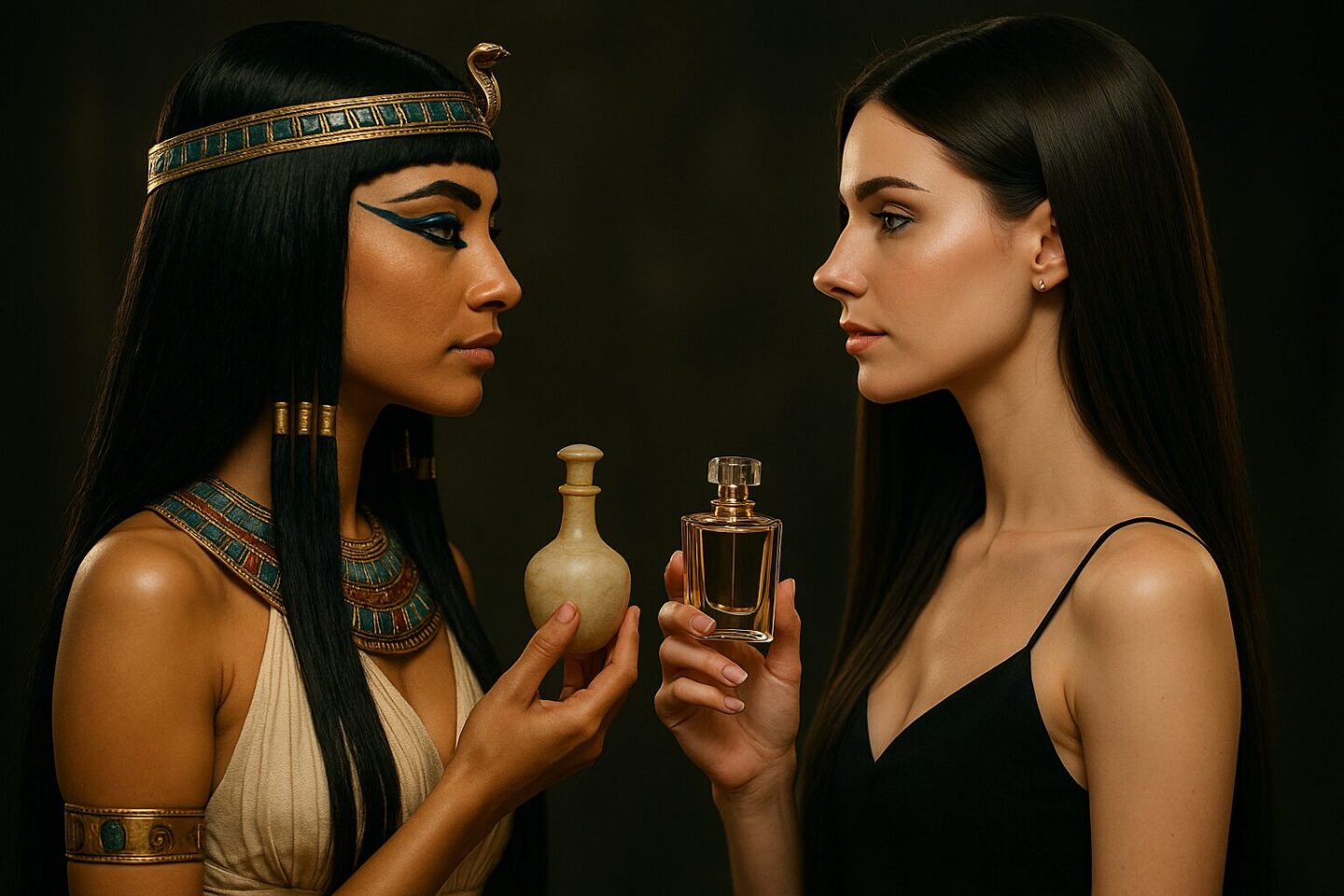

Have you ever wondered why a single drop of perfume can transport you to another time and place? The answer lies in a fascinating journey that spans over 4,000 years of human civilization, in the history of perfume.
Picture this: you’re walking through a bustling marketplace in ancient Egypt, where the air is thick with frankincense and myrrh. Or perhaps you’re strolling through the gardens of Versailles, where Marie Antoinette’s favorite rose water mingles with the evening breeze. This is the power of perfume – it’s not just about smelling good; it’s about connecting us to stories, emotions, and entire civilizations.
Today, we’re embarking on an olfactory adventure that will take you from the sacred temples of Mesopotamia to the cutting-edge laboratories of modern perfumery. By the end of this journey, you’ll never look at your favorite fragrance the same way again.
The Sacred Origins: When Gods Wore Perfume (3000-500 BCE)
Ancient Mesopotamia: The Birthplace of Fragrance
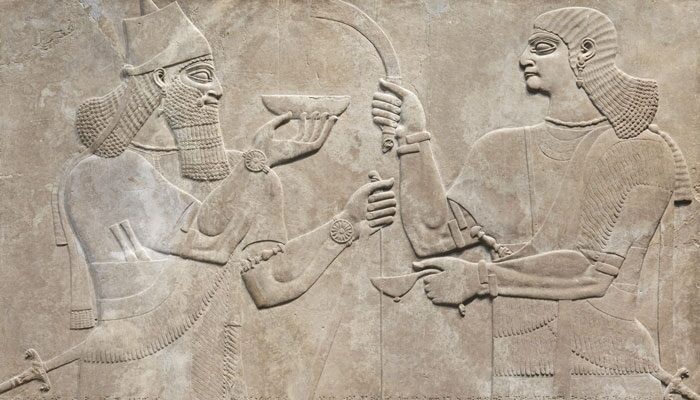
Long before perfume became a symbol of luxury, it served a much higher purpose. In ancient Mesopotamia, around 3000 BCE, the art of perfumery was literally divine. The Sumerians believed that pleasant scents could bridge the gap between the earthly and spiritual realms.
Archaeologists have discovered cuneiform tablets detailing complex recipes for sacred oils. These weren’t just random mixtures – they were carefully crafted formulations using cedar, cypress, and pine resins. The famous chemist and perfumer Tapputi, mentioned in texts from around 1200 BCE, is considered the world’s first recorded perfume maker. Yes, she was a woman, breaking barriers even 3,000 years ago, in the history of perfume!
Egypt: Where Perfume Met Royalty
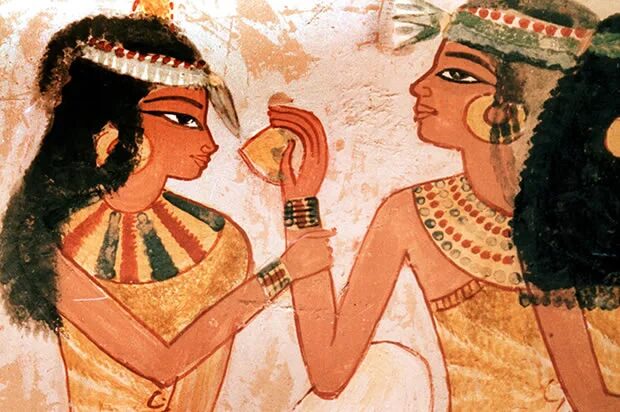
If Mesopotamia planted the seeds, Egypt cultivated the garden of perfumery. The ancient Egyptians elevated scent from sacred ritual to personal luxury, creating what we might recognize today as the first “designer fragrances”, of the history of perfume.
Kyphi: The World’s First Complex Fragrance
Imagine a perfume so sophisticated that it required 16 different ingredients and took weeks to prepare. That was Kyphi, ancient Egypt’s most prized fragrance. This legendary scent combined frankincense, myrrh, raisins, wine, honey, and rare spices in a recipe so secret that only high priests knew the complete formula.
Cleopatra herself was renowned for her love of fragrance. Historical accounts describe how she would perfume the sails of her ships, ensuring that her presence was announced by scent long before she arrived. Talk about making an entrance!
The Science Behind Ancient Egyptian Perfumery
What’s remarkable is how scientifically advanced these ancient perfumers were. They understood maceration, distillation, and enfleurage – techniques still used today. Egyptian perfumers discovered that animal fats could capture and preserve floral essences, creating the first solid perfumes.
Classical Antiquity: Greece and Rome Refine the Art (500 BCE – 500 CE)
Greek Innovation: The Birth of Liquid Perfume
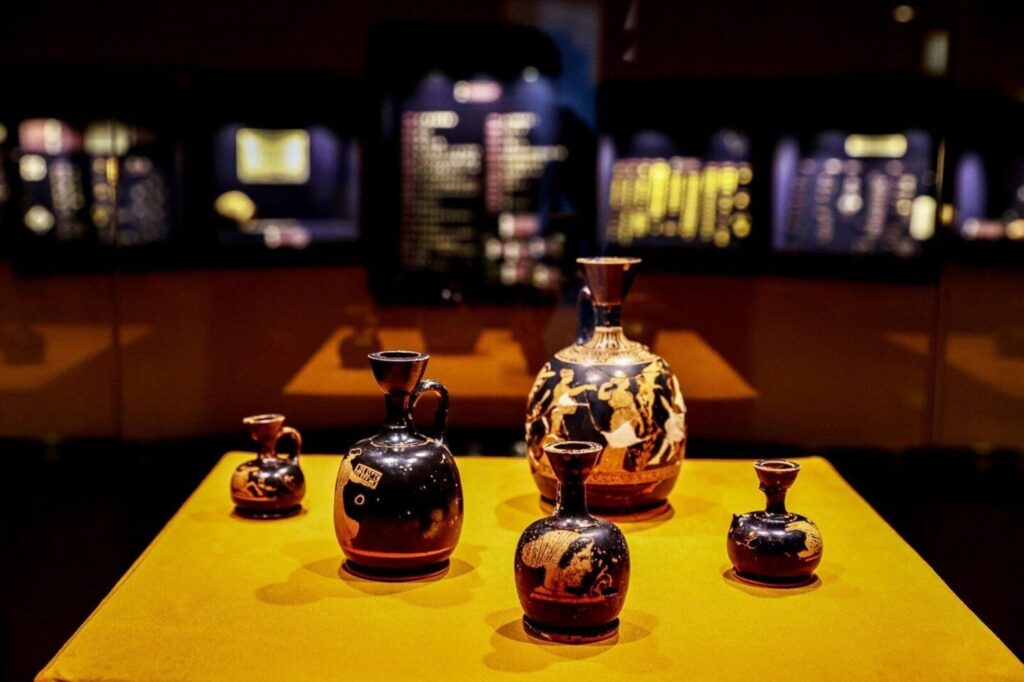
The Greeks took Egyptian perfumery and added their own philosophical touch. They were the first to create liquid perfumes using oil-based solutions, moving away from the solid unguents favored by Egyptians.
Greek perfumers developed the concept of “fragrance families” – grouping scents by their dominant characteristics. Rose perfumes were associated with Aphrodite, while mint represented hospitality. This classification system laid the groundwork for how we categorize fragrances today.
Roman Excess: When More Was Always Better
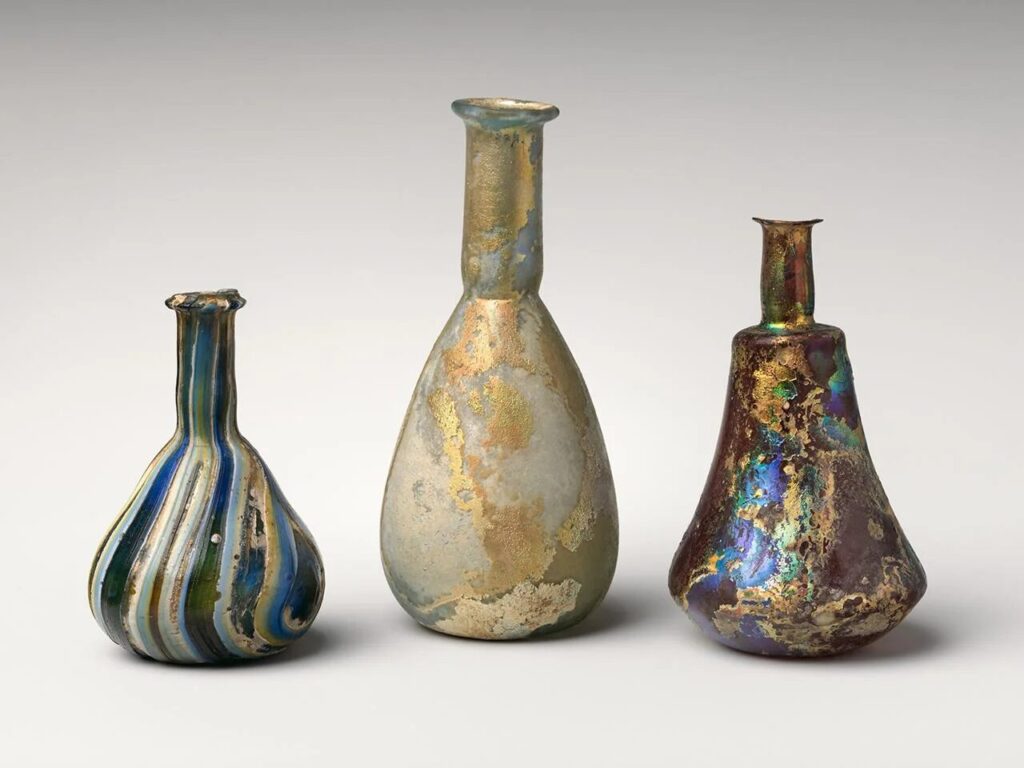
If there’s one thing Romans knew how to do, it was excess. Roman perfume culture reached heights of extravagance that wouldn’t be matched until the French courts of the 18th century.
Romans didn’t just wear perfume – they bathed in it, literally. Public baths were infused with aromatic oils, and wealthy citizens would have slaves whose sole job was to follow them around, reapplying fragrance throughout the day. They even perfumed their pets and furniture!
Pliny the Elder’s Perfume Wisdom
The Roman naturalist Pliny the Elder documented over 100 different perfume recipes in his “Natural History.” His observations about how different scents affect mood and behavior were remarkably advanced for his time, anticipating modern aromatherapy by nearly 2,000 years.
The Middle Ages: Perfume Survives the Dark Ages (500-1400 CE)
The Islamic Golden Age: Preserving and Advancing the Art
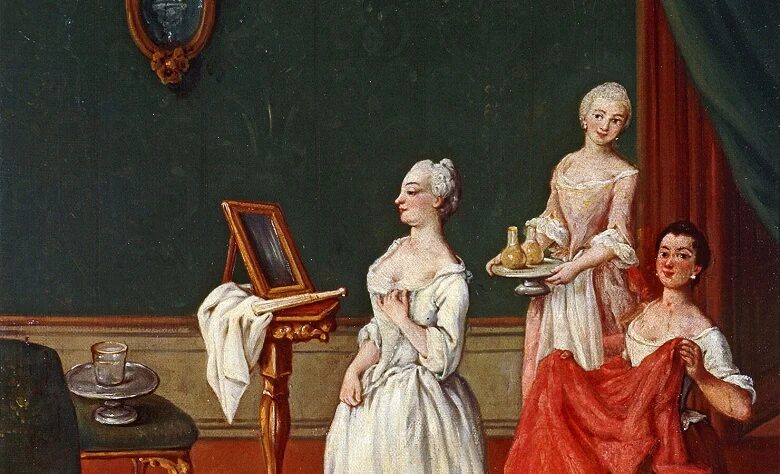
While Europe entered the Dark Ages, the Islamic world became the guardian of perfumery knowledge. Arab alchemists made groundbreaking discoveries that revolutionized fragrance creation.
Al-Kindi: The Father of Modern Perfumery
In the 9th century, the polymath Al-Kindi wrote the “Book of the Chemistry of Perfume and Distillations,” containing over 100 perfume recipes. But more importantly, he refined the process of distillation, making it possible to extract pure essential oils from flowers – a technique that remains virtually unchanged today.
The Crusades: Bringing Scent Back to Europe
The Crusades, despite their violent nature, had an unexpected cultural benefit: they reintroduced Europeans to the art of perfumery. Returning crusaders brought back knowledge of distillation techniques and exotic ingredients like ambergris and musk.
The Renaissance: Perfume Becomes Personal (1400-1600 CE)
Catherine de’ Medici: The Perfumed Queen
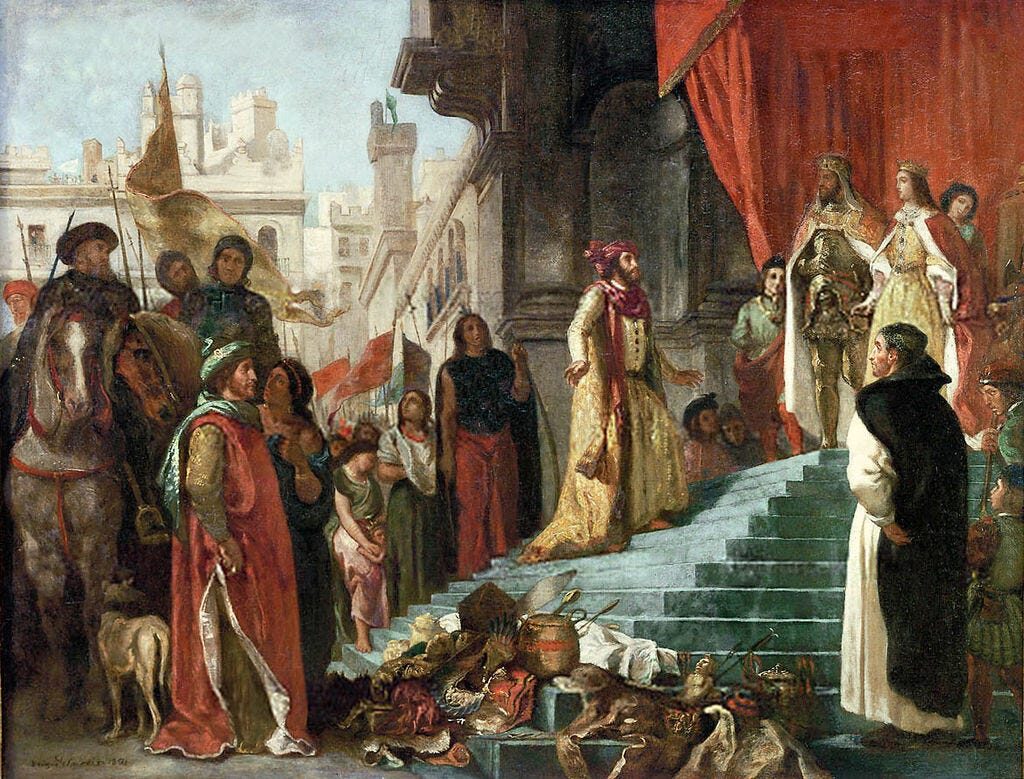
When Catherine de’ Medici married the future King Henry II of France in 1533, she brought with her more than just political alliance – she brought her personal perfumer, René the Florentine. This single event transformed France into the perfume capital of the world.
Catherine’s influence extended beyond royal circles. She popularized perfumed gloves, jewelry, and even handkerchiefs. Suddenly, personal fragrance wasn’t just for the ultra-wealthy – it became a statement of refinement and culture.
The Perfumed Glove Revolution
Renaissance Europeans had an interesting relationship with bathing (spoiler alert: they didn’t do it much). Instead, they relied heavily on perfume to mask odors. Perfumed gloves became the height of fashion, with entire guild systems developing around their production.
The Age of Enlightenment: Science Meets Scent (1600-1800)
Grasse: The Birth of Modern Perfume Industry
A small town in southern France was about to change the world of fragrance forever. Grasse, with its perfect climate for growing jasmine, rose, and lavender, became the undisputed center of perfume production.
What started as a leather-working town transformed when local artisans began perfuming their leather goods to mask unpleasant odors. By the 17th century, Grasse had evolved into a sophisticated perfume manufacturing hub, earning its nickname “the world’s perfume capital.”
The Court of Versailles: Perfume as Political Power
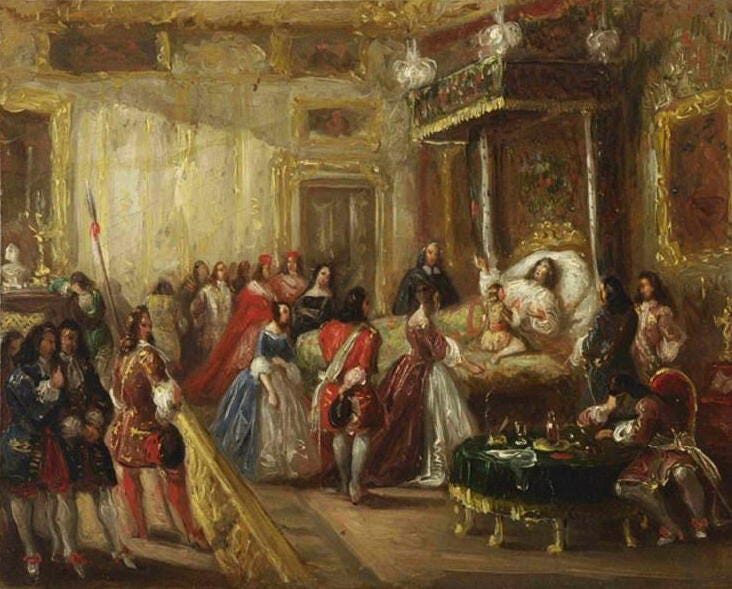
Louis XIV, the Sun King, understood that scent could be a tool of political influence. He mandated that a different perfume be worn at court each day, turning fragrance into a form of communication and status symbol.
Marie Antoinette took this to new heights, commissioning her personal perfumer, Jean-Louis Fargeon, to create exclusive scents. Her favorite, a delicate rose and iris blend, became so associated with French royalty that it survived the Revolution and is still produced today.
The Industrial Revolution: Democratizing Luxury (1800-1900)
The Discovery That Changed Everything
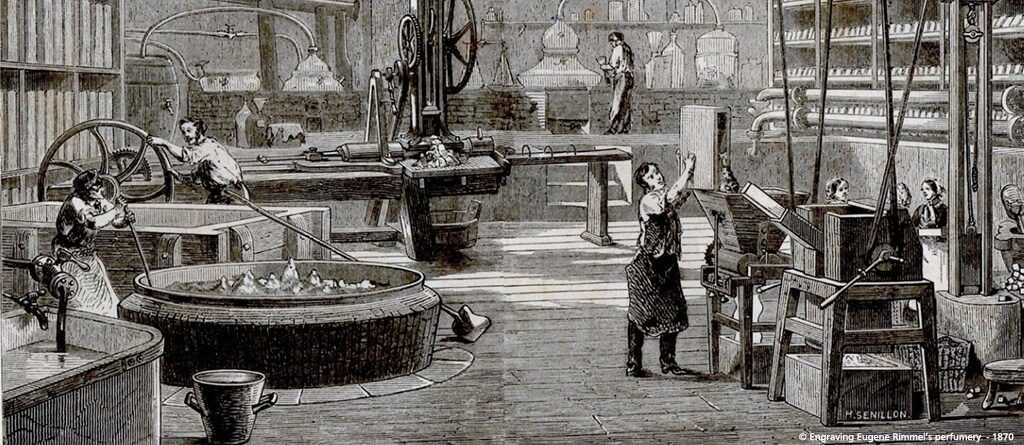
In 1868, British chemist William Henry Perkin made a discovery that would revolutionize perfumery forever. While trying to synthesize quinine, he accidentally created the first synthetic aromatic compound – coumarin, which smells like vanilla and hay.
This breakthrough meant that perfumers were no longer limited to natural ingredients. Suddenly, scents that were impossible to extract from nature could be created in laboratories. This was the beginning of modern perfumery as we know it.
Houbigant and the Birth of Brand Perfumery
Jean-François Houbigant opened his perfume shop in Paris in 1775, but it was during the 19th century that his company truly flourished. Houbigant created some of the first “branded” perfumes, complete with distinctive bottles and marketing campaigns.
Their 1882 fragrance “Fougère Royale” was revolutionary – it was the first perfume to use synthetic coumarin, creating an entirely new fragrance family (fougère) that remains popular today.
The Golden Age: Perfume Becomes Art (1900-1950)
Coco Chanel: The Woman Who Changed Everything
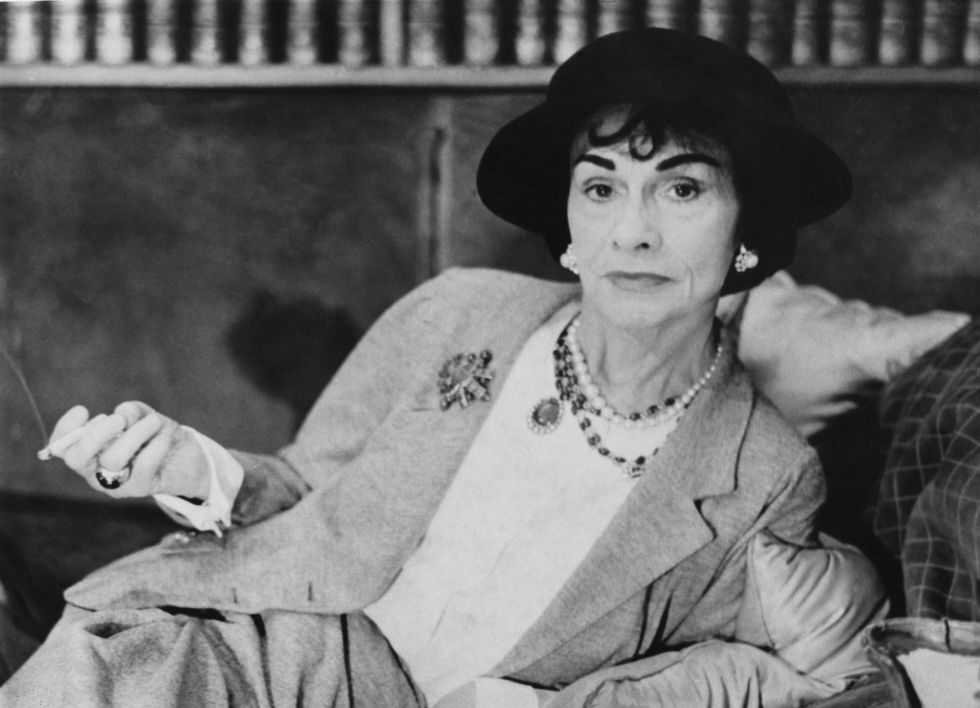
In 1921, a fashion designer with no experience in perfumery created what would become the world’s most famous fragrance. Gabrielle “Coco” Chanel wanted a perfume that “smells like a woman, not a rose garden.”
Working with Ernest Beaux, a Russian-French perfumer, she created Chanel No. 5. The revolutionary aspect wasn’t just the scent – it was the philosophy. For the first time, a perfume was designed to enhance a woman’s natural scent rather than mask it.
The Magic of Aldehydes
Chanel No. 5’s secret weapon was aldehydes – synthetic compounds that create a sparkling, effervescent top note. Legend has it that Beaux accidentally overdosed the formula with aldehydes, but Chanel loved the mistake. Sometimes the best innovations come from happy accidents!
The Rise of Perfume Houses
The early 20th century saw the establishment of legendary perfume houses that still dominate the industry today:
Guerlain’s Innovation Legacy Founded in 1828, Guerlain created some of perfumery’s most important innovations. Their 1925 fragrance “Shalimar” was the first to use synthetic vanillin, creating an oriental fragrance family that defined luxury for generations.
The Art Deco Influence Perfume bottles became works of art during this period. Lalique, Baccarat, and other glassmakers created stunning vessels that were as precious as their contents. The bottle became part of the perfume’s identity, not just its container.
The Modern Era: Technology Meets Tradition (1950-Present)
The Chemical Revolution
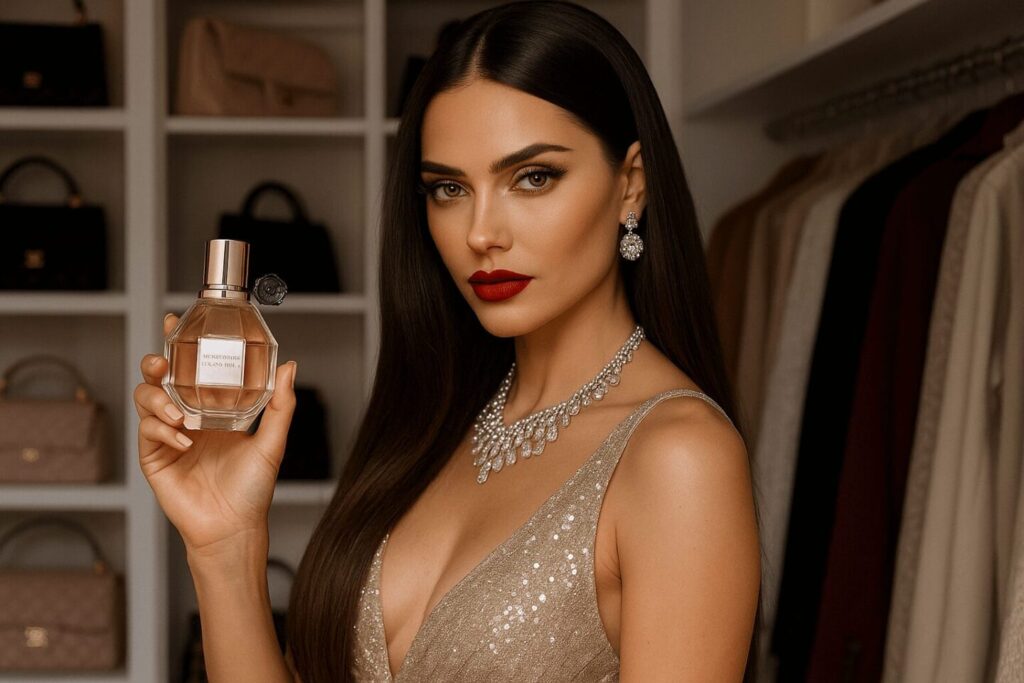
The post-war boom brought unprecedented innovation to perfumery. Synthetic chemistry advanced rapidly, giving perfumers access to hundreds of new aroma compounds. This explosion of possibilities led to some of the most iconic fragrances of the 20th century.
Estée Lauder and the American Dream
Estée Lauder proved that perfume success wasn’t limited to French houses. Her 1953 fragrance “Youth-Dew” revolutionized the American market by positioning fragrance as an everyday luxury, not just for special occasions.
The Designer Decade: 1980s Excess
The 1980s brought us power suits, big hair, and even bigger fragrances. Perfumes like Giorgio Beverly Hills and Poison were designed to make statements – subtle they were not. This era proved that fragrance trends reflect broader cultural movements.
The Niche Revolution (1990s-Present)
As mass-market perfumery became increasingly commercialized, a counter-movement emerged. Niche perfume houses like L’Artisan Parfumeur, Diptyque, and Le Labo began creating artisanal fragrances for connoisseurs seeking something unique.
These houses returned to perfumery’s artistic roots, prioritizing creativity over commercial appeal. They proved that there was a market for challenging, complex fragrances that told stories rather than simply smelling pleasant.
The Digital Age: Perfume in the 21st Century
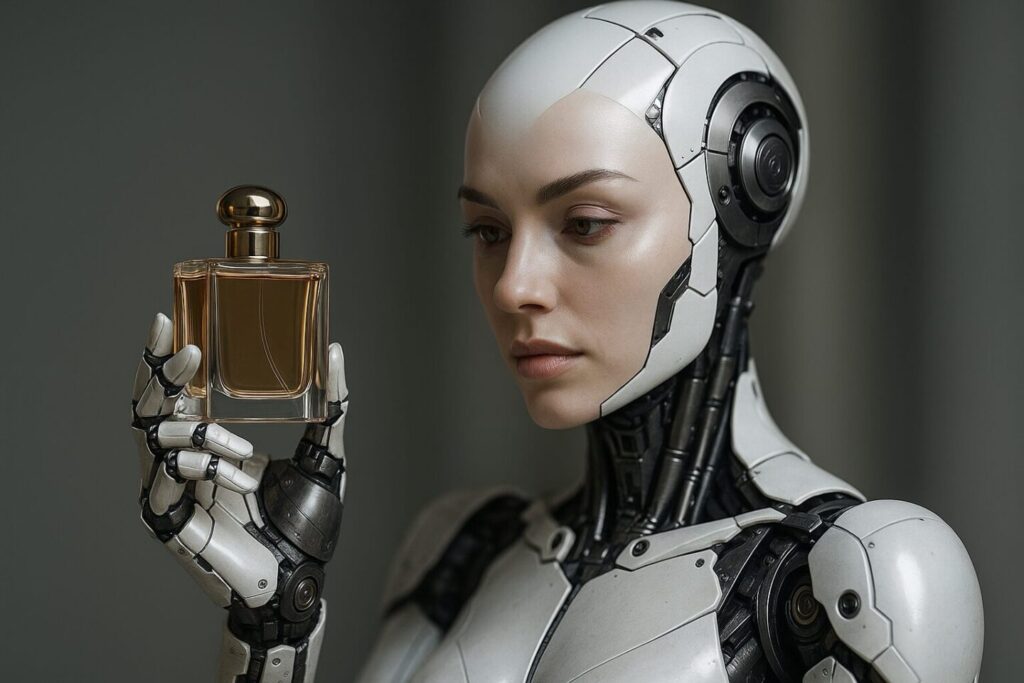
AI and Aromachology
Today’s perfumers have tools their predecessors could never imagine. Artificial intelligence helps predict how different molecules will interact, while aromachology – the study of how scents affect behavior – provides scientific backing for perfumery’s emotional impact.
Companies like IBM are working with perfume houses to use AI in fragrance creation, analyzing vast databases of molecular structures to suggest new combinations. While this might sound impersonal, it’s actually freeing perfumers to focus on the creative aspects of their craft.
Sustainable Perfumery
Modern consumers increasingly care about sustainability, pushing the industry toward eco-friendly practices. Companies are investing in synthetic biology to create nature-identical molecules without harvesting rare plants. This approach protects endangered species while ensuring sustainable supply chains.
Personalized Fragrance
Technology now allows for personalized perfumes based on individual preferences, skin chemistry, and even genetic markers. Companies like Maison Margiela and Atelier Cologne offer customization services, while startups use algorithms to recommend fragrances based on personal taste profiles.
The Science Behind the Magic: How Modern Perfumers Work
The Perfumer’s Organ
Modern perfumers work at stations called “organs” – semicircular desks lined with hundreds of raw materials. A master perfumer might have access to over 3,000 different ingredients, each with its own olfactory profile and behavior.
Creating a modern fragrance is part art, part science. Perfumers must understand not just how individual ingredients smell, but how they interact with each other, how they evolve on skin, and how they’ll be perceived by different people.
The Anatomy of Modern Fragrance
Today’s perfumes are built on the three-note structure developed in the late 19th century:
- Top Notes: The first impression, lasting 15-30 minutes
- Heart Notes: The character of the fragrance, lasting 2-4 hours
- Base Notes: The foundation, lasting 6-8 hours or more
This structure allows perfumers to create complex narratives that unfold over time, telling stories through scent.
Cultural Impact: How Perfume Shapes Society
Fragrance and Identity
Throughout the history of perfume, perfume has been more than just a pleasant smell – it’s been a form of self-expression, a marker of status, and a tool of seduction. Different cultures have developed unique relationships with fragrance that reflect their values and traditions.
In many Middle Eastern cultures, fragrance is considered essential to personal hygiene and hospitality. Guests are often greeted with rosewater or oud, creating immediate sensory memories.
The Psychology of Scent
Modern research confirms what perfumers have intuited for millennia: scent has a unique power to affect emotion and memory. The olfactory system connects directly to the limbic brain, where emotions and memories are processed.
This is why a whiff of a particular perfume can instantly transport you to a specific moment or person. It’s not just nostalgia – it’s neuroscience.
🔥 Veja Também:
- New York the City of Dreams, da Lattafa: o perfume que cheira a ambição, cereja e sonhos dourados
- Guia dos Perfumes Árabes Femininos: 5 Opções para Exalar Luxo Sem Gastar uma Fortuna
- Olympea Elixir: o novo lançamento da Rabanne que promete capturar a hora dourada em um frasco
- Layering de Perfumes: Como Misturar Fragrâncias e Criar um Cheiro Só Seu
- CH Swing e CH Men Swing: A Nova Onda de Frescor e Ousadia de Carolina Herrera
Looking Forward: The Future of Fragrance
Biotechnology and Sustainability
The future of perfumery lies in biotechnology. Companies are developing fermentation processes to create rare ingredients like oud and ambergris without impacting wild populations. Ginkgo Bioworks and other biotech companies are partnering with fragrance houses to create sustainable alternatives to traditional ingredients and change all in the history of perfume.
Virtual and Augmented Reality
Imagine being able to smell a perfume through your smartphone or experiencing a fragrance in virtual reality. While we’re not quite there yet, researchers are working on technologies that could revolutionize how we discover and experience fragrances.
The Democratization of Perfumery
Just as social media democratized photography and publishing, new technologies are making perfume creation more accessible. Companies like Olfactory and Demeter offer simple tools for creating custom fragrances, while online communities share knowledge and recipes.
Conclusion: Your Personal Fragrance Journey
As we’ve traveled through 4,000 years of the history of perfume, one thing becomes clear: fragrance is far more than a luxury product. It’s a form of communication, a work of art, and a bridge between past and present.
From Tapputi’s ancient laboratory to today’s AI-assisted perfumery, the fundamental human desire to smell beautiful – and to use scent to express ourselves – remains constant. We’ve simply become more sophisticated in how we achieve it.
Your story in this grand narrative is just beginning. Every time you choose a fragrance, you’re participating in humanity’s oldest luxury tradition. You’re not just wearing perfume – you’re wearing history, art, and science all at once.
So the next time you spray on your favorite fragrance, take a moment to appreciate the incredible journey that led to that bottle in your hand. From ancient temples to modern laboratories, from royal courts to niche perfumeries, you’re connected to thousands of years of human creativity and innovation.
What will your signature scent say about you? What memories will it create? What story will it tell?
The beautiful thing about perfume is that while its history is ancient, your personal fragrance story is entirely your own to write.
Ready to explore more fascinating stories from the world of fragrance? Subscribe to Perfume Prosa for weekly deep-dives into perfumery’s most intriguing tales, from forgotten fragrances to tomorrow’s innovations. Your olfactory adventure is just beginning.
Stay Connected to the World of Fragrance!
Love discovering unique scents and the stories behind them? Join our Perfume Prosa Newsletter and be the first to explore the latest trends, expert tips, and exclusive content on the art of perfumery.
✨ Subscribe now and never miss a fragrance discovery! ✨
Em alta agora